Sand Creek Corridor Restoration Project
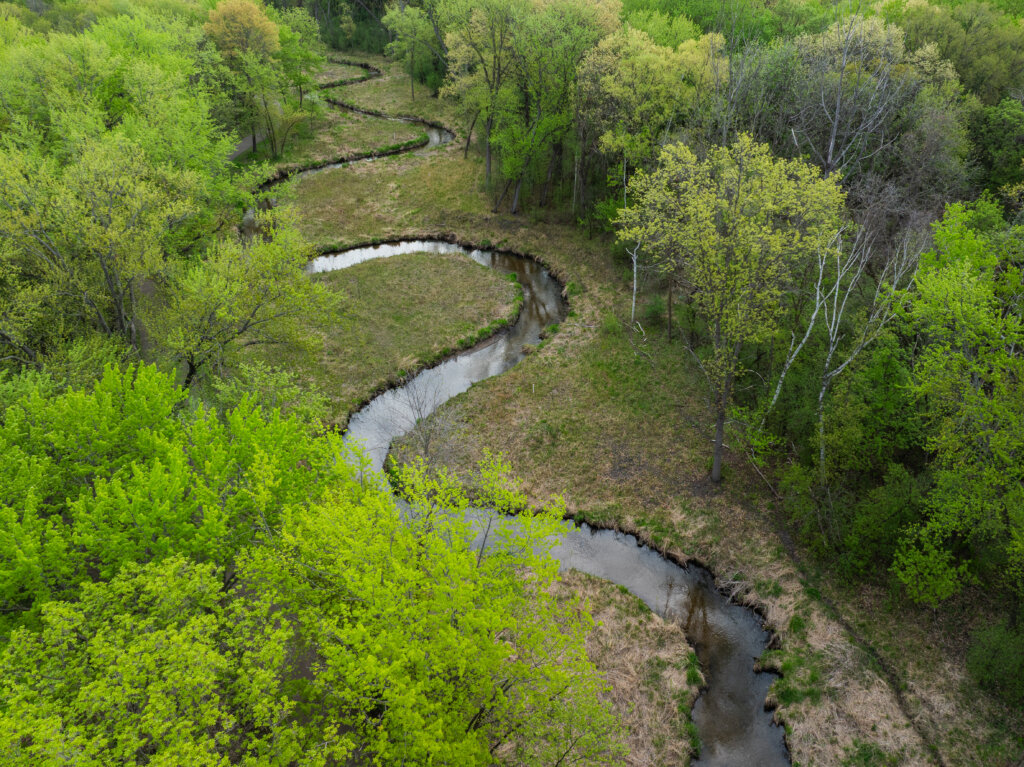
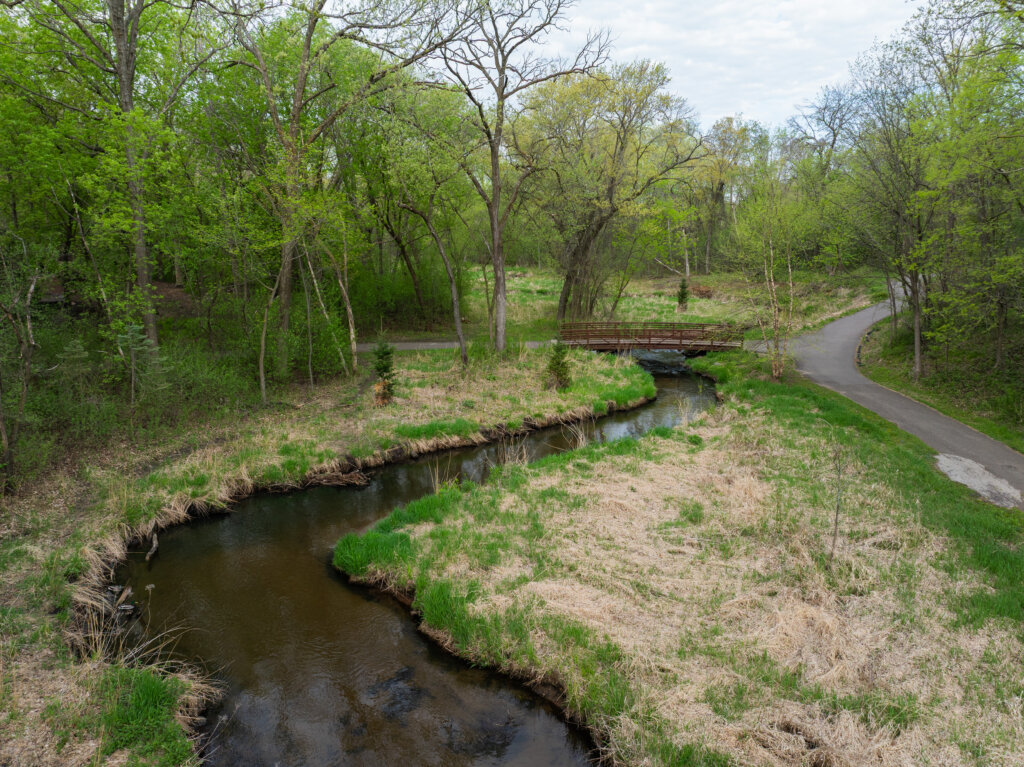
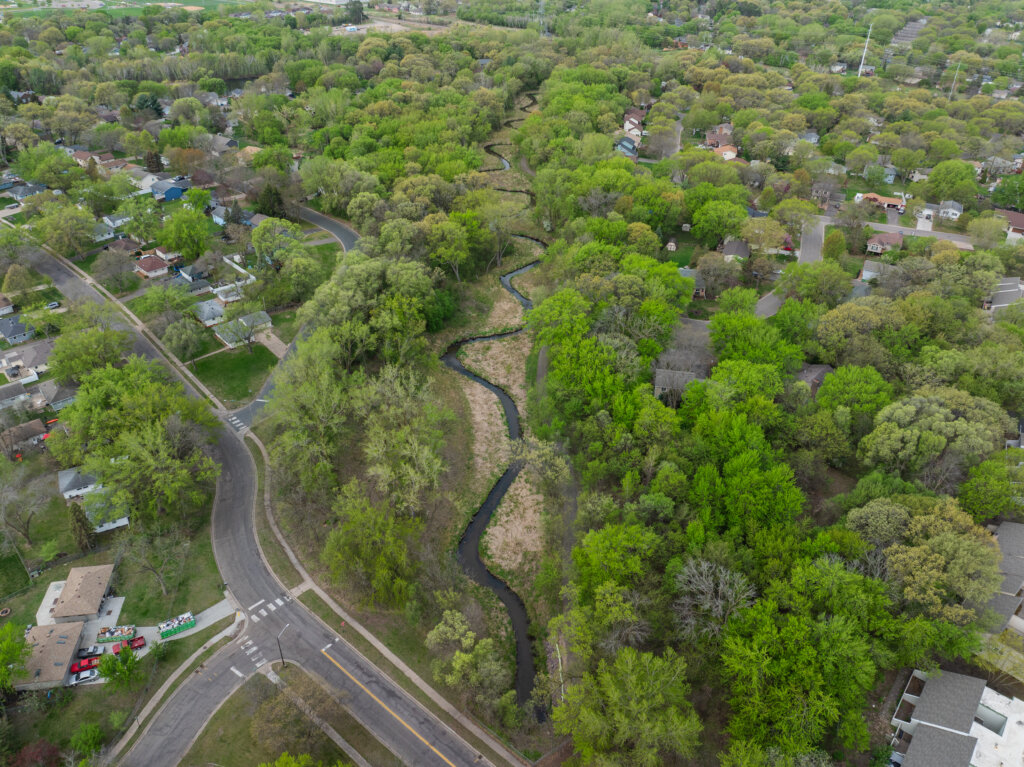
More than a mile of Sand Creek has been restored to a natural, meandering channel. The project stabilized streambanks, reduced sediment and phosphorus pollution, and improved wildlife habitat.
Background
Sand Creek is currently listed as impaired for failing to meet federal Clean Water Act standards. Sand Creek is impaired for aquatic life due to excess sediment, phosphorus, poor habitat, and altered hydrology. Restoring the creek channel and the adjacent land directly addresses these issues and improves local water quality.
Learn more about the Clean Water Act and Aquatic Life Impairments.
Project Goals
- Improve fish and wildlife habitat in and adjacent to the creek
- Reduce sediment and nutrient pollution
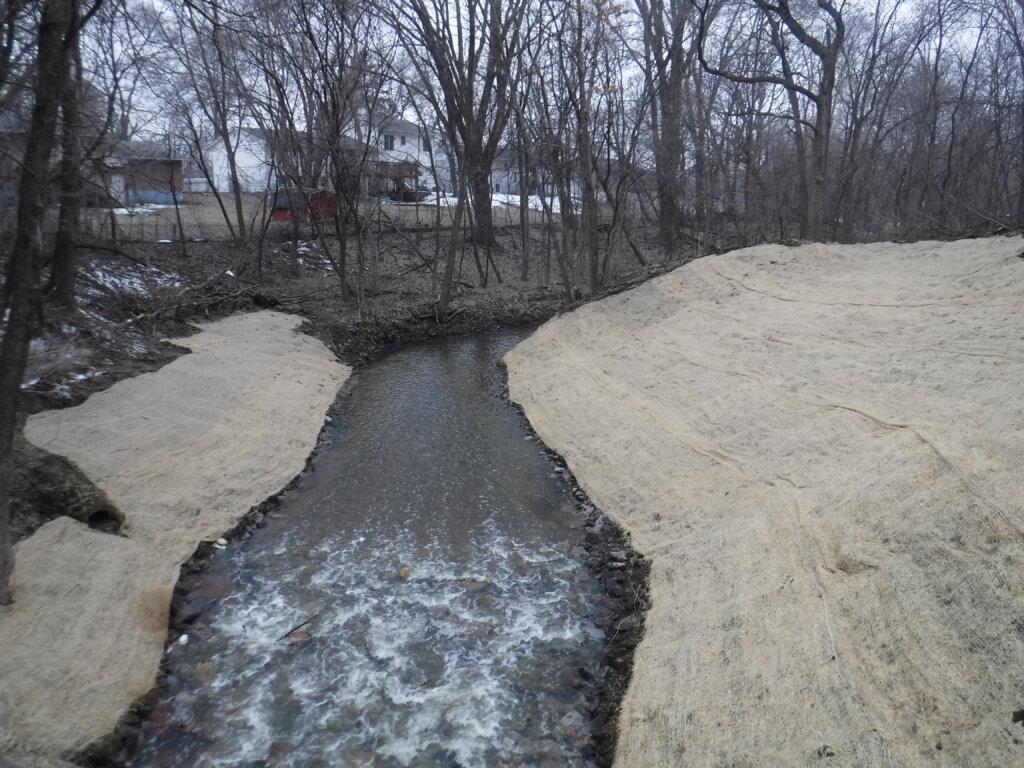
- Reduce erosion and provide long-term channel stability
Project Highlights
Returning Curves to the Creek
In the not-too-distant past, when local land use was dominated by agriculture, many of our local waterways were redirected from their natural winding paths into straight lines designed to move water faster and maximize land use. As rural landscapes become suburban, the demands placed on local waterways change. There is now a greater need to focus on retaining and restoring water to improve water quality, protect public health, and reduce flood risks.
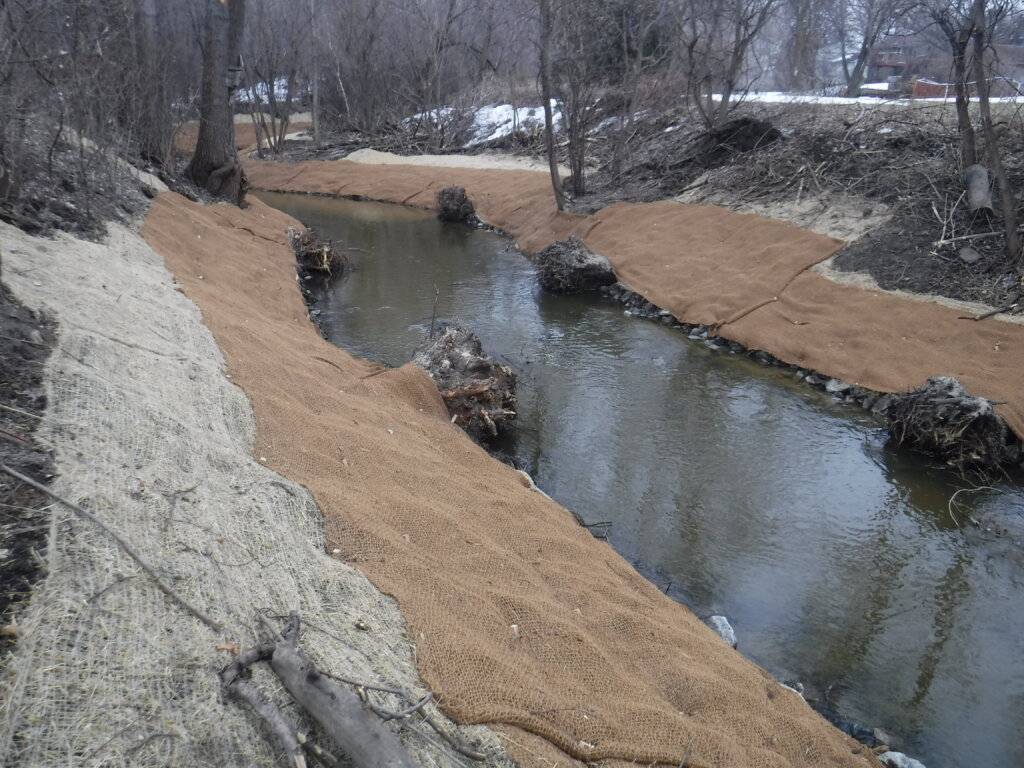
Returning the curves to the creek slows the speed of water moving through the system. Slowing the flow of water protects the creek from erosion, reducing sediment and nutrient pollution. It also reduces flood risk to downstream communities and gives the landscape more time to absorb excess water.
Habitat Restoration
This restoration project incorporated a variety of in-creek and near-creek habitat features designed to grow stronger over time.
- Riffles: Rock structures were strategically placed below the water level to create changes in water flow. These changes result in riffles and pools that add oxygen to the water and provide habitat for fish and insects.
- Root wads: Dead trees were buried in key locations along the bank of the creek. Their root systems were left exposed to the flowing water. The exposed tree roots provide excellent shelter and habitat for fish, insects, and other aquatic organisms.
- Native Plants: Near-creek habitat was improved by removing over 5 acres of invasive buckthorn. The restoration area was planted with native seed, live dogwood stakes, native plant bands, perennial pollinator plugs, and six different native tree species.
Project Funding
The Sand Creek Corridor Restoration was implemented as two separately funded projects. The Lower Sand Creek Corridor Restoration was completed in 2019 and the Middle Sand Creek Corridor Restoration was completed in 2021. Both projects were funded by the Coon Creek Watershed District with additional grant funding from the US EPA 319 Grant Program and the Minnesota Board of Water and Soil Resources (BWSR) Clean Water, Land and Legacy Amendment.
This project was completed in partnership with the City of Coon Rapids and the Minnesota Department of Natural Resources.

Project Contact
Tyler Thompson, Operations & Maintenance Coordinator