Woodcrest Creek Biochar & Iron-Enhanced Sand Filter
What is a Biochar & Iron-Enhanced Sand Filter?
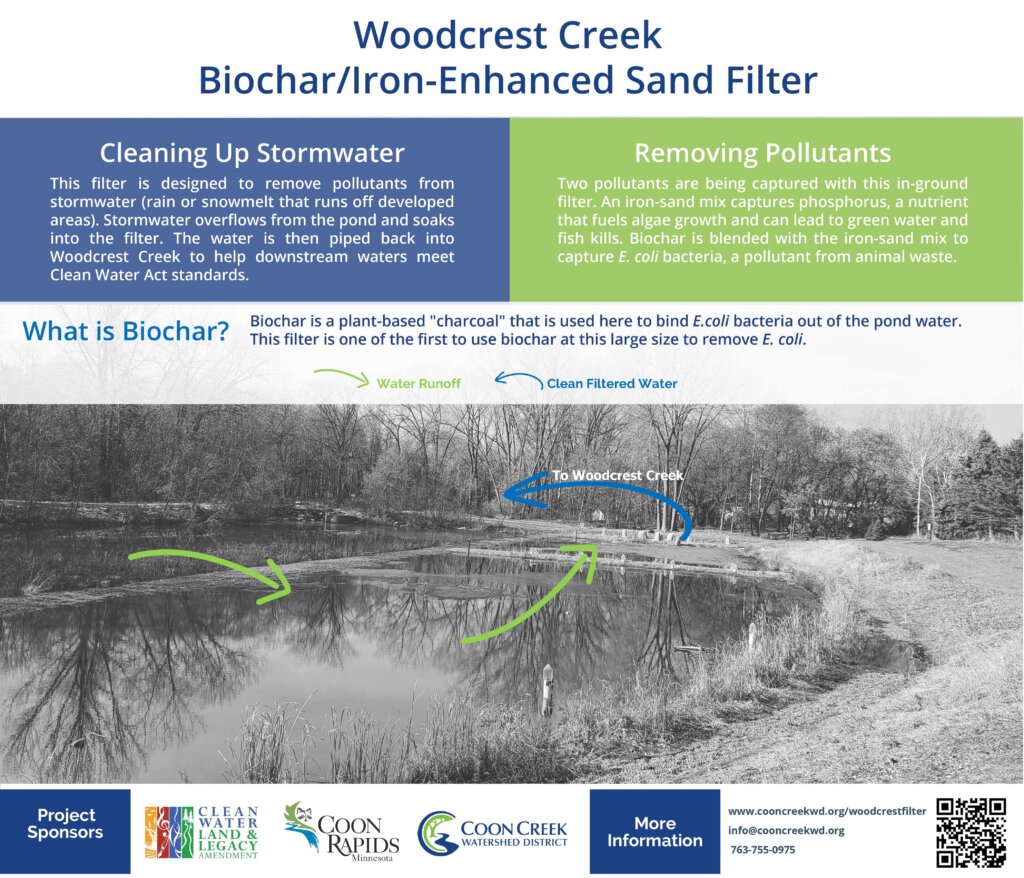
Iron-Enhanced Sand Filters are a common stormwater Best Management Practice (BMP) used to reduce pollution in our waterways. These filters use a filtration media comprised of sand and iron filings. When water filters through this media, the iron filings bind to excess nutrients like phosphorus, effectively removing them from our water. Too much phosphorus in our water promotes algae growth and lowers water quality.
The Woodcrest Creek filter utilizes Biochar in addition to iron filings. Biochar is plant-based charcoal that binds to E. coli, a type of bacteria commonly found in animal waste. The addition of Biochar to the filtration media means that this filter can remove both phosphorus and E. coli.
The Woodcrest Creek Biochar & Iron-Enhanced Sand Filter was Minnesota’s first regional-scale stormwater BMP to incorporate biochar.
How it works
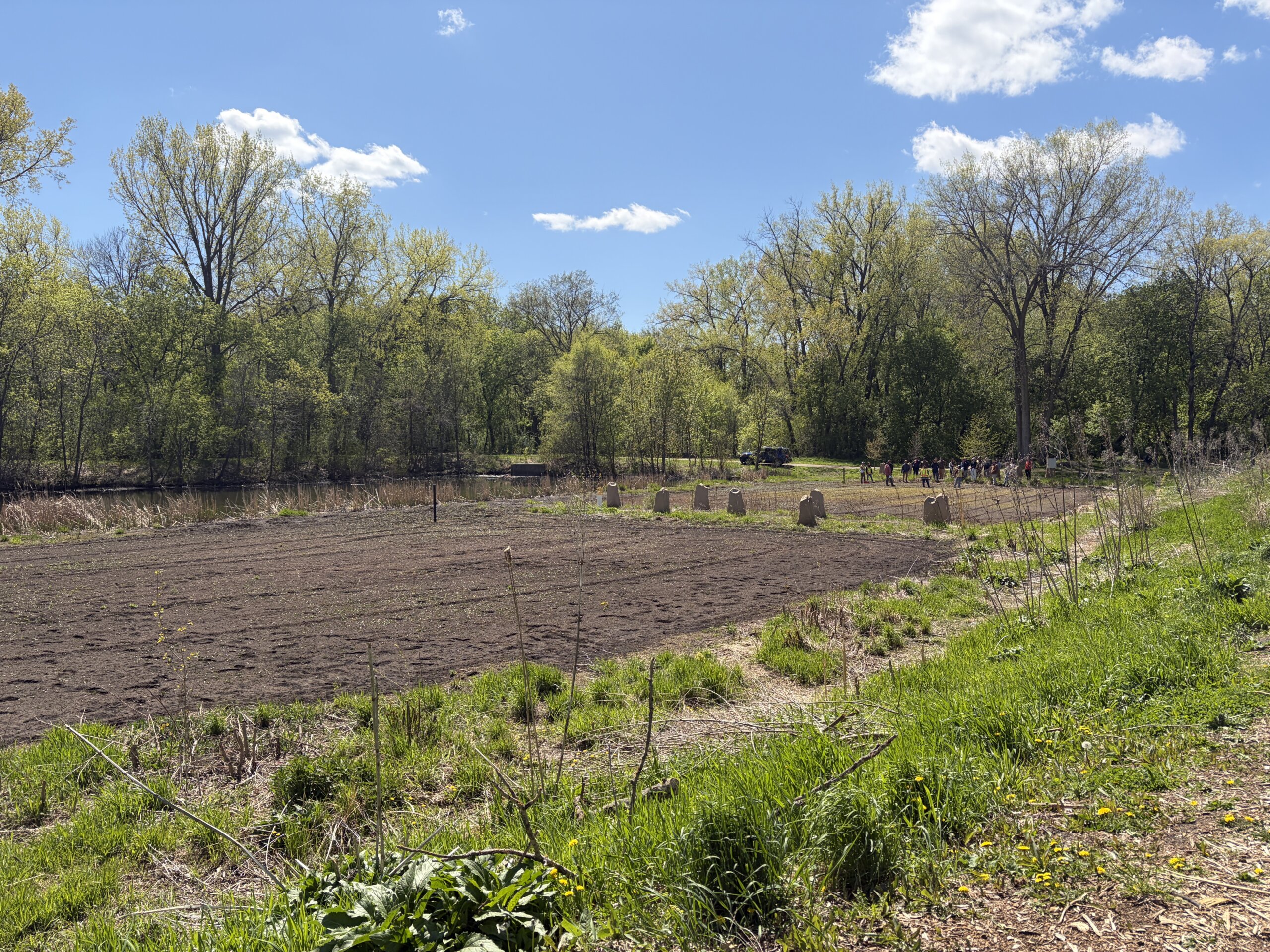
During rainstorms, water overflows the neighboring pond and enters the filter area. As the water slowly soaks down through the filtration media, the pollutants (phosphorus andE.coli) are removed. The iron filings bind to the phosphorus, and the biochar binds to the E. coli. Binding the pollutants keeps them in the filter, allowing cleaner water to pass through and re-enter Woodcrest Creek.
This project was completed in 2020. Regular monitoring indicates that the filter is successfully removing significant amounts of phosphorus and E. coli bacteria from Woodcrest Creek!
Project Funding
This project was funded by the City of Coon Rapids, the Coon Creek Watershed District, and the Clean Water Fund.